[Important Notice for US Customers]
Due to current US import regulations, please contact us before placing your order. We will confirm the shipping cost, import duties and taxes applicable to your order and provide you with the final amount before payment. ▶Contact usYAMANI SHODOSHIMA
YAMANI WA#3000 Resinoid Bond
YAMANI WA#3000 Resinoid Bond
Couldn't load pickup availability
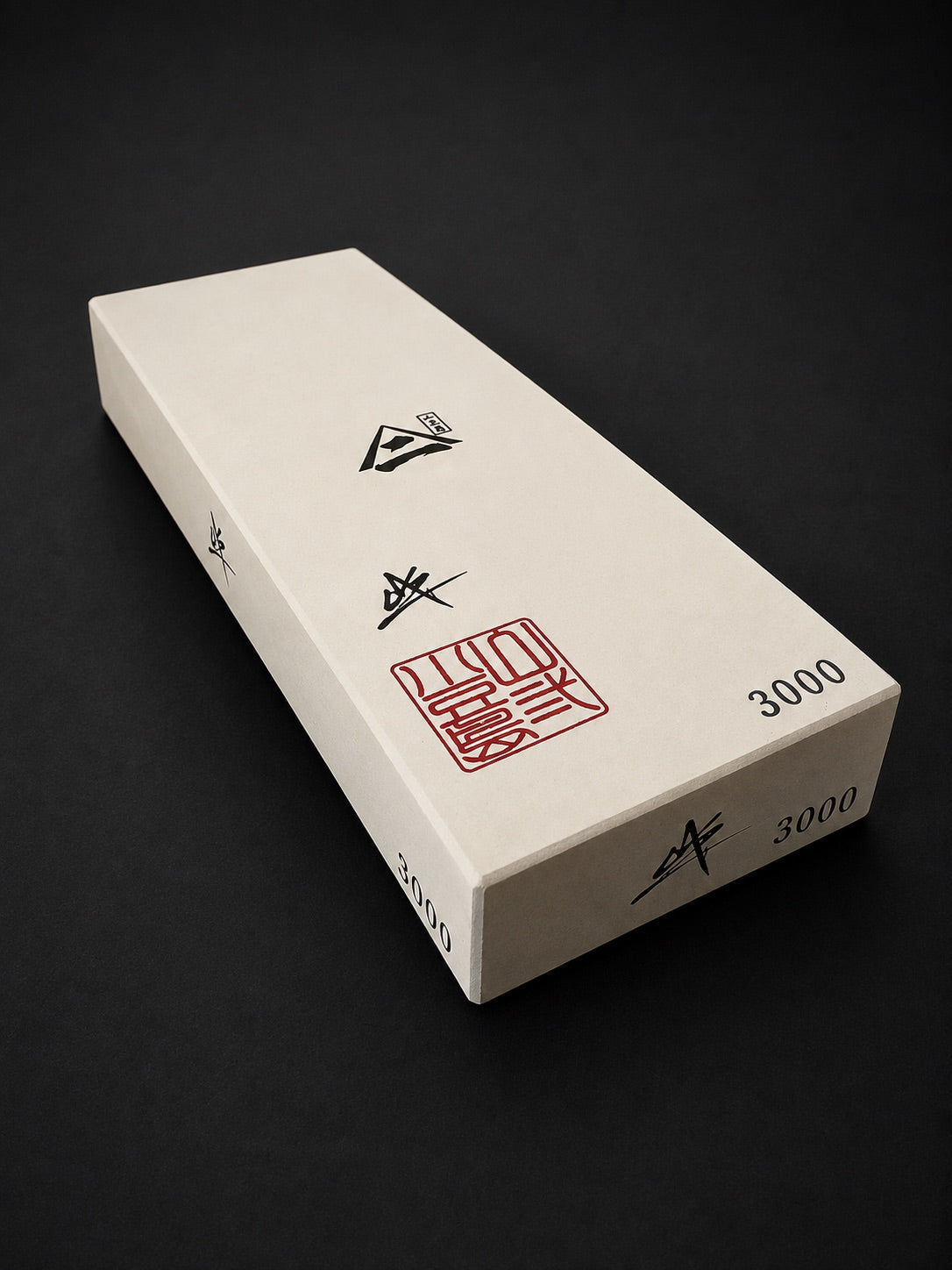
WA #3000 Resinoid Bond — White Alumina Finishing Whetstone
A fine sharpening stone made with WA (White Alumina) abrasive, designed to refine the cutting edge after medium-grit sharpening.
Following the WA #1000, the #3000 further reduces sharpening scratches and refines the edge, producing a smoother cutting feel while maintaining a practical level of bite.
It is an excellent intermediate finishing stone for Japanese kitchen knives and can also serve as a practical final finishing stone for everyday professional use, depending on the knife and its intended purpose.
Key Features
- WA (White Alumina) abrasive
- #3000 fine grit
- Size: 210 x 72 x 23mm
- Weight: 700g
- Refines the edge after #1000 sharpening
- Produces a smoother, more refined cutting edge
- Maintains a good balance between sharpness and practical bite
- Suitable for both intermediate and practical final finishing
- Excellent preparation before higher-grit finishing stones
How to Use a Resinoid Bond Whetstone.
- Do not soak the stone in water.
- Apply a small amount of water to the surface before sharpening.
- Add water as needed during use to keep the surface wet.
- After sharpening, rinse the surface with clean water.
- Allow the stone to air-dry naturally in a shaded, well-ventilated area.
Caution: Avoid prolonged soaking, hot water, direct sunlight, and rapid drying with heaters or other heat sources.
Resinoid whetstones are bonded with a resin-based binder and are generally not designed for prolonged immersion in water.
Leaving a resinoid whetstone submerged for an extended period may cause the stone to absorb water into its structure. Depending on the specific resin and construction, this can lead to:
- Changes in the stone’s hardness or feel during sharpening
- Softening or weakening of the resin bond
- Changes in sharpening performance and abrasive release
- Cracking, deformation, or other structural damage, particularly if the stone is subjected to repeated wetting and drying
Share